

Introduction
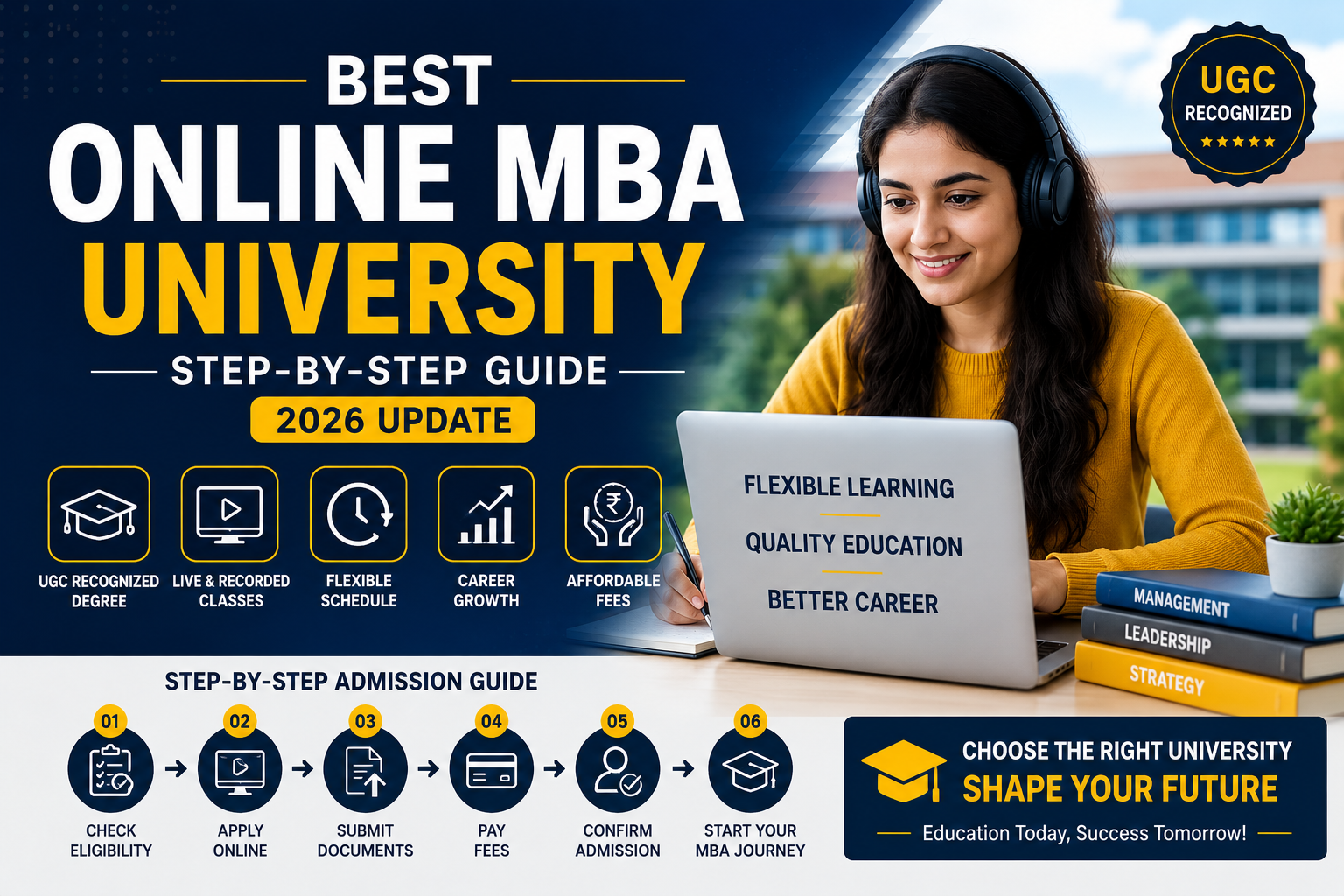
The popularity of Online MBA programs in India has grown rapidly over the last few years. As technology transforms education and workplaces become increasingly digital, professionals and students are looking for flexible ways to gain management skills without leaving their jobs or relocating.
In 2026, an Online MBA is no longer viewed as an alternative to traditional education. Instead, it has become a preferred choice for working professionals, entrepreneurs, and graduates who want to accelerate their careers while maintaining flexibility.
However, with numerous universities offering online MBA programs, selecting the best online MBA university can be challenging. This comprehensive guide will help you understand everything about online MBA programs, including eligibility, specializations, admission processes, career opportunities, and how to choose the right university in 2026.

What is an Online MBA?
An Online MBA (Master of Business Administration) is a postgraduate management degree delivered through digital learning platforms.
Students can:
- Attend live online classes
- Access recorded lectures anytime
- Complete assignments digitally
- Participate in virtual discussions
- Take examinations online
The curriculum is designed to provide knowledge in business management, leadership, finance, marketing, operations, human resources, and strategic decision-making.
The degree earned from a recognized university carries academic value and helps learners develop industry-relevant skills.
Why Choose an Online MBA in 2026?
1. Learn Without Leaving Your Job
One of the biggest advantages of an online MBA is flexibility.
Students can:
- Continue working full-time
- Manage family responsibilities
- Study from any location
- Learn at their own pace
This makes online MBA programs ideal for professionals seeking career growth.
2. Affordable Education
Traditional MBA programs often involve significant expenses beyond tuition fees.
Online MBA programs help students save money on:
- Accommodation
- Transportation
- Campus-related expenses
- Relocation costs
This makes management education more accessible.
3. Career Advancement
Organizations increasingly seek professionals with strong leadership and management skills.
An MBA can help you:
- Move into leadership positions
- Earn promotions
- Increase earning potential
- Expand professional opportunities
4. Industry-Focused Learning
Modern online MBA programs include practical business concepts such as:
- Business Analytics
- Digital Marketing
- Financial Management
- Strategic Leadership
- Entrepreneurship
- Data-Driven Decision Making
These skills align with current industry demands.
Step-by-Step Guide to Choosing the Best Online MBA University
Step 1: Verify University Recognition
The first and most important step is checking university recognition.
Look for:
- UGC Recognition
- NAAC Accreditation
- Government-approved online programs
Recognition ensures the credibility and acceptance of your degree.
Step 2: Check University Reputation
A university’s reputation can impact career opportunities.
Evaluate:
- Academic excellence
- Student reviews
- Industry recognition
- Research achievements
- Alumni success stories
Top universities often provide better learning experiences and stronger professional networks.
Step 3: Compare MBA Specializations
The best online MBA universities offer diverse specialization options.
Popular specializations include:
Marketing Management
Learn branding, advertising, consumer behavior, and marketing strategies.
Finance Management
Study corporate finance, investment analysis, banking, and financial planning.
Human Resource Management
Focus on talent acquisition, employee development, and organizational behavior.
Business Analytics
Learn how to use data for business decision-making.
Operations Management
Gain expertise in logistics, supply chain management, and operational efficiency.
Digital Marketing
Master online advertising, SEO, social media marketing, and content strategy.
Entrepreneurship
Develop skills required to start and manage successful businesses.
Step 4: Evaluate Curriculum Quality
A high-quality MBA curriculum should include:
- Strategic Management
- Business Communication
- Leadership Development
- Financial Accounting
- Marketing Management
- Organizational Behavior
- Business Analytics
- Operations Management
Practical projects and case studies are important indicators of curriculum strength.
Step 5: Review Faculty Expertise
Faculty quality plays a crucial role in learning outcomes.
Choose universities with:
- Experienced professors
- Industry practitioners
- Research-focused faculty
- Guest lectures from corporate leaders
Learning from experienced professionals provides valuable real-world insights.
Step 6: Examine Learning Technology
The learning platform should be user-friendly and interactive.
Look for features such as:
- Live virtual classes
- Recorded sessions
- Mobile accessibility
- Discussion forums
- Digital libraries
- Online assessments
A strong learning management system improves the overall student experience.
Step 7: Assess Placement and Career Support
Career support services can significantly enhance employability.
Important services include:
- Placement assistance
- Resume building
- Interview preparation
- Career counseling
- Internship opportunities
- Industry networking events
Universities with strong placement support offer additional value.
Best Online MBA Universities in India 2026
Some of the leading universities offering online MBA programs include:
- Shoolini University Online
- Amity University Online
- Manipal University Jaipur Online
- Jain University Online
- Lovely Professional University Online
- Chandigarh University Online
Students should compare curriculum, specialization options, fees, faculty, accreditation, and career support before making a decision.
Skills You Gain from an Online MBA
An MBA develops a combination of business and leadership skills.
Leadership Skills
Manage teams and drive organizational success.
Strategic Thinking
Analyze business situations and make informed decisions.
Financial Skills
Understand budgeting, investments, and financial planning.
Communication Skills
Improve professional communication and presentation abilities.
Problem-Solving Skills
Learn to address complex business challenges effectively.
Career Opportunities After an Online MBA
Graduates can pursue careers across multiple industries.
Marketing
- Marketing Manager
- Brand Manager
- Product Manager
- Digital Marketing Manager
Finance
- Financial Analyst
- Finance Manager
- Investment Consultant
- Risk Manager
Human Resources
- HR Manager
- Talent Acquisition Specialist
- HR Consultant
Operations
- Operations Manager
- Supply Chain Manager
- Logistics Manager
Business Analytics
- Business Analyst
- Data Analyst
- Strategy Consultant
Entrepreneurship
- Startup Founder
- Business Development Manager
- Business Consultant
Who Should Pursue an Online MBA?
Working Professionals
Individuals seeking promotions and leadership opportunities.
Entrepreneurs
Business owners aiming to improve management capabilities.
Fresh Graduates
Students looking to gain business expertise and enhance employability.
Career Switchers
Professionals transitioning into management roles.
Is an Online MBA Worth It in 2026?
Yes.
An Online MBA provides:
- Flexible learning
- Career advancement opportunities
- Leadership development
- Industry-relevant knowledge
- Professional networking
- Cost-effective education
As businesses continue to embrace digital transformation and global competition, professionals with management expertise remain in high demand.
Conclusion
Choosing the best online MBA university is a critical decision that can significantly influence your career trajectory. The right program should combine academic excellence, industry relevance, flexible learning, experienced faculty, and strong career support.
Before enrolling, carefully compare accreditation, curriculum quality, specializations, faculty expertise, technology platform, and placement assistance.
With the right online MBA program, you can build the skills, confidence, and leadership capabilities needed to succeed in the dynamic business environment of 2026 and beyond.





 +91 9056161621
 Support@collegekampus.com
 Collegekampus.com