
Introduction
The education landscape has changed dramatically over the past decade. With advancements in technology and increasing demand for flexible learning, online degree programs have become one of the most preferred choices for students and working professionals. However, one question still remains common among students and parents:
“Is an online degree equal to a regular degree?”
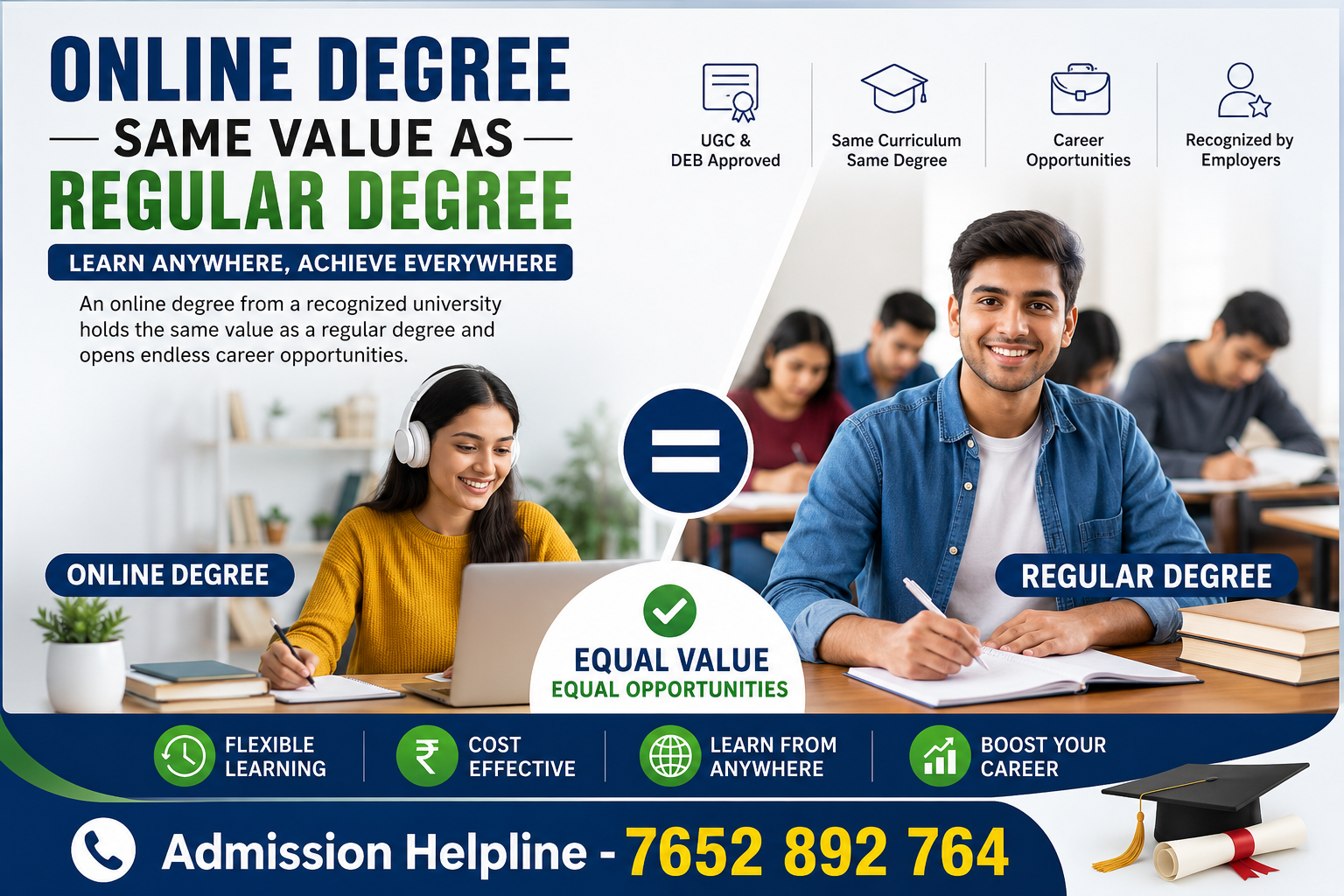
The answer is Yes, provided the online degree is offered by a recognized and approved university. Today, online education is accepted by employers, government organizations, and higher education institutions across India and many countries worldwide.
Admission Helpline – 7652 892 764
In this comprehensive guide, we will explore the value of online degrees, their recognition, career opportunities, advantages, and how they compare with traditional regular degrees.

What is an Online Degree?
An online degree is a university degree earned through digital learning platforms instead of attending physical classrooms. Students can access lectures, study materials, assignments, and examinations through online portals from anywhere.
Popular online degree programs include:
- Online MBA
- Online BBA
- Online BCA
- Online MCA
- Online M.Com
- Online BA
- Online MA
- Online B.Com
- Online Data Science Programs
- Online Computer Science Degrees
These programs are designed to provide the same curriculum and academic standards as traditional classroom-based programs.
Is an Online Degree Equivalent to a Regular Degree?
Yes. According to current educational regulations in India, degrees awarded through approved online learning modes hold the same academic value as regular degrees.
Students pursuing online degrees receive:
- Recognized university degree
- Same syllabus and curriculum
- Qualified faculty guidance
- Academic credits
- Examination and assessment process
- Eligibility for higher education
As long as the university is approved by relevant educational authorities, the degree remains valid for employment and further studies.
Why Online Degrees Are Gaining Popularity
1. Flexibility
Students can study according to their own schedule. This is especially beneficial for:
- Working professionals
- Entrepreneurs
- Homemakers
- Competitive exam aspirants
2. Learn From Anywhere
Geographical barriers are removed. Students from small towns and rural areas can access quality education without relocating.
3. Cost Effective
Online programs often reduce expenses related to:
- Hostel fees
- Transportation
- Accommodation
- Campus-related expenses
4. Career Growth
Professionals can continue working while upgrading their qualifications simultaneously.
Online Degree vs Regular Degree
| Feature | Online Degree | Regular Degree |
|---|---|---|
| Curriculum | Same | Same |
| Degree Recognition | Equal | Equal |
| Flexibility | High | Limited |
| Classroom Attendance | Not Required | Mandatory |
| Learning Mode | Digital | Physical |
| Cost | Generally Affordable | Higher |
| Suitable for Working Professionals | Yes | Difficult |
| Location Independence | Yes | No |
The biggest difference lies in the mode of learning, not in the academic value of the degree.
Are Online Degrees Accepted by Employers?
Modern employers increasingly focus on:
- Skills
- Knowledge
- Experience
- Problem-solving abilities
- Certifications
Most companies today recognize online degrees from approved universities. In fact, many recruiters appreciate candidates who demonstrate self-discipline and time management through online learning.
Industries actively hiring online degree graduates include:
- Information Technology
- Banking
- Finance
- Marketing
- Human Resources
- E-Commerce
- Education
- Healthcare Management
- Business Analytics
Can Online Degree Holders Apply for Government Jobs?
Yes.
Students with recognized online degrees can apply for various government examinations and jobs if they meet the eligibility criteria specified by the recruiting authority.
Popular government exams include:
- UPSC
- SSC
- Banking Exams
- Railways
- State PSC Exams
- Insurance Sector Exams
Candidates should always verify specific recruitment notifications for updated eligibility requirements.
Can You Pursue Higher Education After an Online Degree?
Absolutely.
Online degree graduates can pursue:
- MBA
- MCA
- M.Tech (where eligible)
- M.Com
- MA
- Professional Certifications
- PhD Programs (subject to university criteria)
Universities generally consider recognized online degrees valid for higher education admissions.
Advantages of Online Degrees
Flexible Learning Environment
Students can learn at their own pace without disrupting personal or professional commitments.
Access to Recorded Lectures
Missed a lecture? Simply watch the recorded session anytime.
Better Work-Study Balance
Working professionals can earn while learning.
Industry-Oriented Curriculum
Many online programs regularly update their curriculum according to industry requirements.
Digital Skills Development
Students naturally develop:
- Communication skills
- Technology skills
- Virtual collaboration abilities
- Time management skills
Common Myths About Online Degrees
Myth 1: Online Degrees Are Not Valid
Reality: Recognized online degrees are valid and accepted.
Myth 2: Employers Prefer Only Regular Degrees
Reality: Employers prioritize skills, performance, and experience.
Myth 3: Online Learning Is Easier
Reality: Online learning requires strong discipline and self-motivation.
Myth 4: Online Students Receive Less Knowledge
Reality: Most online programs follow the same curriculum as traditional courses.
Who Should Choose an Online Degree?
An online degree is ideal for:
Working Professionals
Looking for career advancement without quitting their jobs.
Entrepreneurs
Who want business education while managing ventures.
Homemakers
Seeking higher education from home.
Students in Remote Areas
Who lack access to quality educational institutions nearby.
Career Changers
Who want to acquire new qualifications and skills.
Future of Online Education in India
The future of online education is extremely promising. With digital transformation and increasing internet penetration, more students are choosing flexible learning options.
Key trends include:
- AI-powered learning platforms
- Virtual classrooms
- Industry certifications
- Interactive learning experiences
- Skill-based education
- Global classroom access
Experts predict substantial growth in online higher education over the coming years.
How to Choose the Right Online Degree Program
Before enrolling, consider:
University Recognition
Ensure the university is approved by relevant authorities.
Curriculum Quality
Review the course structure carefully.
Faculty Expertise
Check faculty qualifications and industry experience.
Placement Support
Explore career services and placement assistance.
Learning Management System
A user-friendly platform enhances the learning experience.
Student Reviews
Read testimonials and alumni feedback.
Final Verdict: Is an Online Degree Equal to a Regular Degree?
The answer is a clear Yes.
An online degree from a recognized university carries the same academic value as a regular degree. The curriculum, learning outcomes, and qualification awarded are designed to meet established educational standards.
For students seeking flexibility, affordability, and career growth opportunities, online degrees offer an excellent alternative to traditional classroom education. As employers continue embracing digital transformation, the acceptance and popularity of online degrees are only expected to increase.
Choosing the right university and program is the key to maximizing the value of your online education journey.
FAQs
Is an online degree valid for jobs?
Yes, recognized online degrees are accepted by many private and public sector employers.
Can I get placement support with an online degree?
Many universities provide placement assistance, career counseling, and interview preparation services.
Is an online MBA equivalent to a regular MBA?
Yes, if obtained from a recognized university, an online MBA holds academic validity comparable to a regular MBA.
Can online degree holders apply for government exams?
Yes, recognized online degree holders can apply for government examinations subject to eligibility requirements.
Which online degree is best for working professionals?
Popular options include Online MBA, Online BBA, Online MCA, Online Data Science, and Online M.Com programs.
Are online exams difficult?
Online exams follow academic standards similar to traditional assessments and require proper preparation.
Can I pursue a master’s degree after completing an online bachelor’s degree?
Yes, recognized online bachelor’s degrees are generally accepted for postgraduate admissions.
Is an online degree worth it in 2026?
Absolutely. Online degrees provide flexibility, affordability, career advancement opportunities, and recognized qualifications
Conclusion
The debate between online degrees and regular degrees is gradually fading as digital education becomes a mainstream learning option. Today, a recognized online degree offers the same academic credibility, career opportunities, and higher education prospects as a traditional degree. What truly matters is the quality of the university, the skills you develop, and how effectively you apply your knowledge in the real world.
For students, working professionals, entrepreneurs, and lifelong learners, online education provides the flexibility to achieve academic and career goals without compromising existing responsibilities. With increasing employer acceptance, industry-focused curriculum, and advanced learning technologies, online degrees have become a powerful pathway to professional success.
If you choose a recognized and reputed university, an online degree can be a smart investment in your future—helping you gain valuable qualifications, enhance your skills, and unlock new career opportunities. As education continues to evolve in 2026 and beyond, online degrees are not just an alternative to regular education; they are a respected and future-ready choice for ambitious learners..







 Collegekampus.com