

Introduction
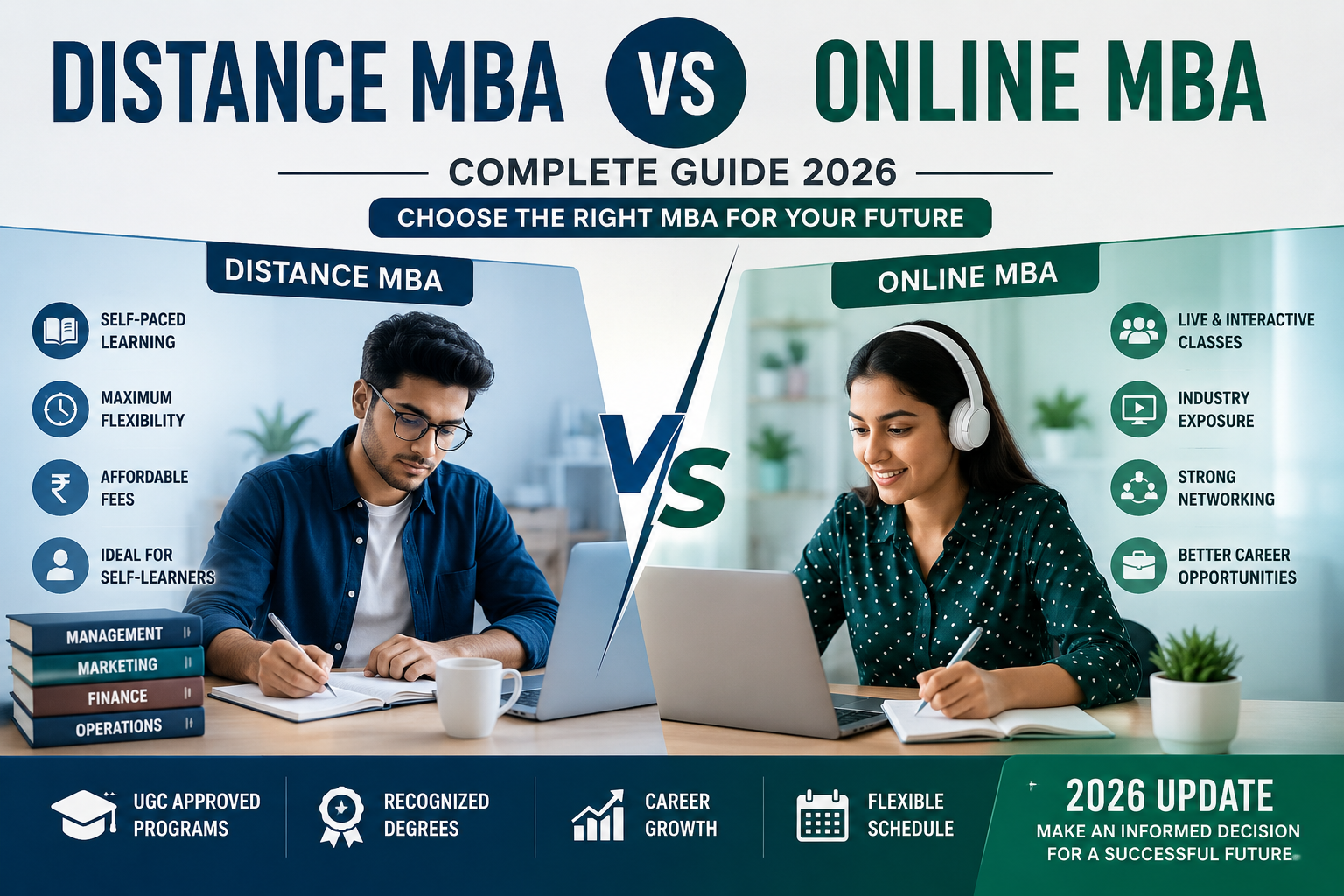
Management education has evolved significantly in recent years. With advancements in digital learning technologies and the growing demand for flexible education, students now have multiple options to pursue an MBA without attending a traditional campus program. Two of the most popular choices are the Distance MBA and the Online MBA.
Many students and working professionals often get confused about which option is better for their career goals. While both programs offer flexibility and convenience, they differ in teaching methods, student engagement, networking opportunities, and overall learning experience.
In this comprehensive 2026 guide, we will compare Distance MBA and Online MBA programs in detail, helping you choose the right path for your professional growth.

What is a Distance MBA?
A Distance MBA is a postgraduate management program where study materials are provided to students through printed books, PDFs, or self-learning resources. Students learn independently and appear for examinations according to the university schedule.
The primary focus of a Distance MBA is self-paced learning with minimal real-time interaction between faculty and students.
Key Features of Distance MBA
- Self-study-based learning
- Printed and digital study materials
- Limited faculty interaction
- Flexible study schedule
- Affordable fee structure
- Suitable for working professionals and remote learners
What is an Online MBA?
An Online MBA is a digitally delivered management program that utilizes modern learning platforms. Students attend live classes, interact with faculty, participate in discussions, complete online assignments, and access recorded lectures through Learning Management Systems (LMS).
Online MBA programs offer a classroom-like experience while allowing students to learn from anywhere.
Key Features of Online MBA
- Live interactive classes
- Recorded lectures
- Faculty support
- Digital learning platform
- Industry-oriented curriculum
- Networking opportunities
- Placement assistance in many universities
Distance MBA vs Online MBA: Quick Comparison
| Feature | Distance MBA | Online MBA |
|---|---|---|
| Learning Mode | Self-paced | Live & Recorded Classes |
| Faculty Interaction | Limited | High |
| Study Material | Printed & Digital | Fully Digital |
| Networking | Minimal | Extensive |
| Flexibility | Very High | High |
| Technology Use | Low | Advanced |
| Placement Support | Limited | Available in many programs |
| Cost | Lower | Moderate |
| Learning Experience | Independent | Interactive |
| Industry Exposure | Limited | Strong |
Recognition and Validity in 2026
One of the biggest concerns among students is whether Distance MBA and Online MBA degrees are valid.
According to current UGC regulations, both Distance MBA and Online MBA programs are valid when offered by recognized universities approved by relevant authorities.
Students should always verify:
- UGC approval
- NAAC accreditation
- AICTE approval (if applicable)
- University ranking and reputation
Employers increasingly recognize online learning, especially when obtained from reputed institutions.
Step-by-Step Guide to Choosing Between Distance MBA and Online MBA
Step 1: Identify Your Career Goals
Ask yourself:
- Do you want a promotion?
- Are you planning a career switch?
- Do you want leadership roles?
- Are you starting a business?
If career growth and networking are priorities, an Online MBA may provide more advantages.
Step 2: Evaluate Your Learning Style
Choose Distance MBA If:
- You prefer self-study.
- You have a highly unpredictable schedule.
- You can stay motivated without supervision.
Choose Online MBA If:
- You enjoy classroom discussions.
- You learn better through interaction.
- You want faculty guidance.
Learning style plays a major role in academic success.
Step 3: Consider Your Budget
Distance MBA programs generally cost less than Online MBA programs.
Average Fee Range in 2026
Distance MBA
- ₹20,000 – ₹1,00,000
Online MBA
- ₹60,000 – ₹3,00,000+
While Online MBAs may require a higher investment, they often provide additional benefits such as career services, mentorship, and networking opportunities.
Step 4: Check Industry Relevance
Modern employers value practical skills.
Online MBA programs often include:
- Live projects
- Industry webinars
- Case studies
- Business simulations
- Corporate mentorship
Distance MBA programs typically focus more on theoretical knowledge.
Step 5: Assess Networking Opportunities
Professional networking can significantly impact career growth.
Distance MBA
- Limited peer interaction
- Few networking events
Online MBA
- Virtual classrooms
- Alumni communities
- Industry sessions
- Professional networking groups
For professionals seeking career advancement, networking can be extremely valuable.
Advantages of Distance MBA
1. Cost-Effective
Distance MBA programs are generally affordable.
2. Maximum Flexibility
Students can study according to their own schedule.
3. Suitable for Remote Areas
No need for continuous internet access or live sessions.
4. Convenient for Full-Time Employees
Ideal for professionals with demanding work schedules.
5. Self-Paced Learning
Students can progress at their own speed.
Advantages of Online MBA
1. Interactive Learning Environment
Students can engage directly with faculty and peers.
2. Better Career Support
Many universities provide:
- Resume building
- Interview preparation
- Placement assistance
3. Industry Exposure
Online MBA programs often collaborate with industry experts.
4. Modern Curriculum
Programs are frequently updated to match market demands.
5. Strong Networking Opportunities
Students connect with professionals from different industries and locations.
Challenges of Distance MBA
- Limited interaction
- Less networking
- Requires strong self-discipline
- Fewer practical learning opportunities
Challenges of Online MBA
- Higher fees
- Requires stable internet connection
- Scheduled live sessions may require time management
Who Should Choose a Distance MBA?
A Distance MBA is ideal for:
- Budget-conscious students
- Government job aspirants
- Professionals with irregular work schedules
- Individuals in remote locations
- Self-motivated learners
Who Should Choose an Online MBA?
An Online MBA is ideal for:
- Working professionals seeking promotions
- Career switchers
- Entrepreneurs
- Fresh graduates seeking industry exposure
- Learners who prefer interaction and guidance
Career Opportunities After Distance MBA and Online MBA
Graduates from both programs can pursue roles such as:
- Marketing Manager
- HR Manager
- Financial Analyst
- Operations Manager
- Business Consultant
- Project Manager
- Sales Manager
- Digital Marketing Manager
- Business Development Manager
The quality of skills, experience, and university reputation often matter more than the delivery mode.
Future of Distance MBA and Online MBA in 2026
The future of management education is becoming increasingly digital. Companies now focus on competencies, practical skills, certifications, and leadership abilities rather than merely the mode of education.
Online MBA programs are experiencing rapid growth because they combine flexibility with interactive learning. However, Distance MBA programs continue to remain relevant for learners seeking affordability and self-paced education.
Both formats will continue to serve different categories of students in 2026 and beyond.
Final Verdict: Distance MBA vs Online MBA
Choosing between a Distance MBA vs Online MBA depends on your personal goals, budget, learning style, and career aspirations.
Choose Distance MBA If:
- You need an affordable option.
- You prefer independent learning.
- You require maximum schedule flexibility.
Choose Online MBA If:
- You want interactive learning.
- You seek better networking opportunities.
- You are focused on career advancement and industry exposure.
For most working professionals in 2026, an Online MBA offers a more engaging and career-oriented learning experience. However, a Distance MBA remains an excellent choice for those seeking affordability and flexibility.
The best MBA is the one that aligns with your goals, lifestyle, and future career plans.








 Collegekampus.com